Timber window frames
The one material that passes design review almost anywhere here
Most pre-war facades in Heemstede and Bloemendaal carry timber frames, often in the dark heritage green known here as RAL 6009. That is not chance. These houses were built with narrow profiles, a horizontal transom bar under the fanlight (a kalf) and glazing bars (roeden) dividing the pane. Plastic cannot be made in the same widths.
New timber frames today are made from laminated hardwood or from modified softwood with a factory-applied paint system. That last point halves the number of repaints in the first fifteen years, because the primer went on under controlled conditions instead of on scaffolding in October.
Have your situation assessed
Calling, sending a photo or filling in the form come to the same thing. With a photo of the current situation it is clear in advance whether this is a repair or a replacement.
Profile and glazing bar
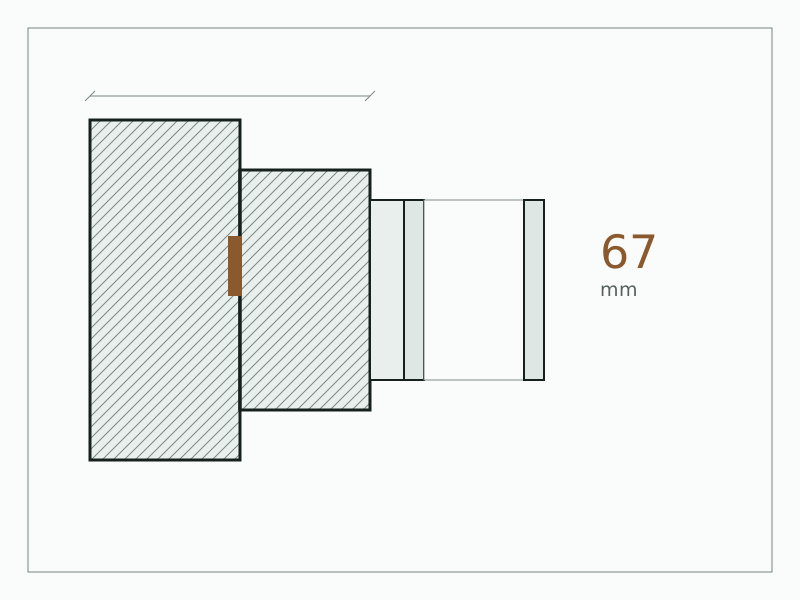
A pre-war window normally has a profile width of 55 to 70 mm. New timber frames can be made to that width; whether it works depends on the thickness of the glass unit.
Colour
Heritage green RAL 6009 and off-white RAL 9001 are the two colours that keep coming back in this area. In a protected village area the municipality can prescribe a colour number.
Maintenance
Checking the sealant joint and the sill once a year takes half an hour per facade and stretches the interval to the next repaint considerably.
The species used most here are meranti and sapele for standard work, and accoya for frames facing the sea or exposed to a lot of rain. Accoya is modified softwood carrying a 50 year warranty against rot above ground; it barely moves, which means the paint film stays intact for longer.
Timber needs maintenance, and that is the honest other side. Opaque painted timber facing north holds up for eight years; facing south west with driving rain, six. That is not an argument against timber, but it is a cost line that belongs in the comparison: allow 60 to 110 euro per frame per repaint on a facade you can reach from the ground.
For a house in a protected village area, timber is usually the only material that passes design review without discussion, provided the colour and the profile match what was there.
Questions about timber window frames
Opaque painted timber: every six to eight years, depending on which way the facade faces and whether there is an overhang above it. Clear-finished hardwood: every three to four years, which is why we rarely advise it on a facade that catches the sun.
To buy, yes, by roughly 30 to 50 percent. Over fifty years the gap narrows, because a timber frame reaches that age and a plastic one is normally replaced once. Both sums are set out on the comparison page, with the assumptions next to them.
On the sea side in Zandvoort and Aerdenhout we advise accoya or a well-sealed hardwood with a double factory paint coat. Salt and wind-blown sand ask more of the finish there than ten kilometres inland.
Where we do this
Also possible
- Window frame repair: Keep the existing frame and replace only the part that has failed
- Insulated glazing and HR++: From single glazing to 1.1: what it gives you and what it costs
- uPVC window frames: Where they are the better choice, and where they are not
- Broken glass and glazing: A cracked pane, a failed sealed unit or new glazing throughout
Quotation for timber window frames
A photo, your postcode, the year the house was built and the number of frames produce a range. The quotation follows only after measuring up in the rebate: a wrong dimension is the most expensive mistake in this trade.