Insulated glazing and HR++
From single glazing to 1.1: what it gives you and what it costs
Single glazing has a U-value of about 5.2 W/m²K. What the Dutch market calls HR++, a sealed double unit with a low-emissivity coating and an argon fill, sits at 1.1. In a pre-war house with large window openings that is the biggest single step available to you, bigger than cavity wall insulation in most of these houses, because the glazed area here is large.
The question is rarely whether it helps, but whether it fits. An HR++ unit is 24 mm thick. If that does not fit the existing rebate there are three routes: thin insulating glass, secondary glazing, or replacing the frame. All three cost something different and all three do something different to the way the facade looks.
Have your situation assessed
Calling, sending a photo or filling in the form come to the same thing. With a photo of the current situation it is clear in advance whether this is a repair or a replacement.
Replacing the glass only
Possible when the frame is sound and the rebate deep enough. This is the quickest route and the shortest payback, because you pay for the glass and the glazing work and nothing else.
Thin insulating glass
Units of 10 to 14 mm fit many pre-war rebates. The U-value stops around 1.6 to 2.0, so less than HR++, but the frame and its glazing bars (roeden) are left alone.
Secondary glazing
A second pane on the inside. Nothing changes outside, which in a protected village area is the argument that decides it. Inside you see an extra profile and you operate two windows instead of one.
Triple glazing, sold here as HR+++, reaches roughly 0.6 W/m²K but weighs nearly twice as much and needs heavier ironmongery. In an existing wooden frame that is usually a step too far.
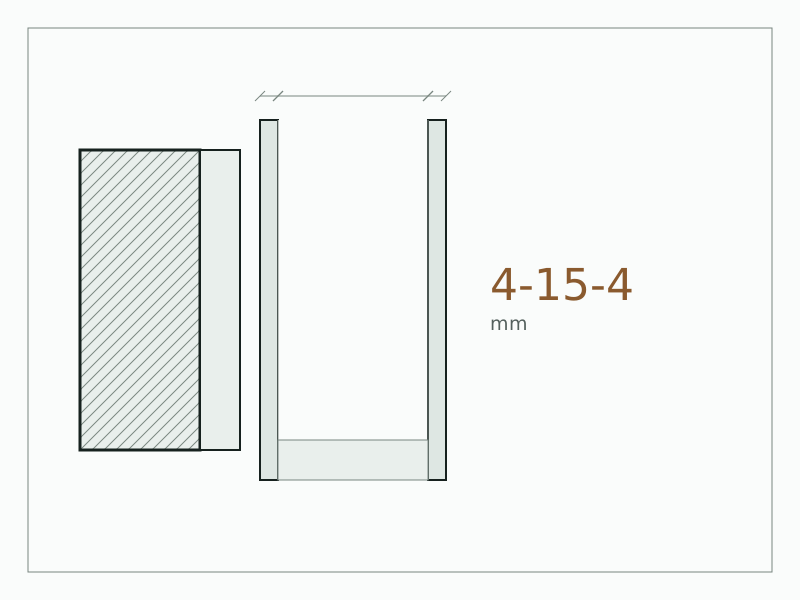
Sound follows a different logic than heat. A standard 4-15-4 HR++ unit lands around 30 dB. An asymmetric unit with a laminated outer pane, for example 33.1-15-6, reaches about 37 dB. You hear that difference: the ear reads roughly 10 dB as a halving of the noise. Along the Zandvoortselaan or the Rijksstraatweg that is the reason people give for replacing.
Solar control coatings reduce heat gain and keep a south-facing room cooler, but they also cost you free warmth in winter. In this part of the country that only makes sense on large south or west facing panes.
Questions about insulated glazing and hr++
As a guide, for a terraced house with about 12 m² of single glazing: 200 to 350 m³ of gas per year. For a detached house with larger openings it runs higher. This is a guide figure from the public calculation rules published by Milieu Centraal, not a promise: your heating habits, the insulation of roof and floor, and the orientation of the facade decide the outcome.
By condensation between the panes that you cannot wipe off, and by a dull haze that changes with the weather. The gas fill has gone and the unit insulates barely better than single glazing. A failed unit cannot be repaired, only replaced.
The glass manufacturer warrants the sealed unit itself, normally ten years against seal failure. That warranty is issued in your name and appears on the quotation, with the name of the supplier next to it.
Where we do this
Also possible
- Window frame repair: Keep the existing frame and replace only the part that has failed
- Timber window frames: The one material that passes design review almost anywhere here
- uPVC window frames: Where they are the better choice, and where they are not
- Broken glass and glazing: A cracked pane, a failed sealed unit or new glazing throughout
Quotation for insulated glazing and hr++
A photo, your postcode, the year the house was built and the number of frames produce a range. The quotation follows only after measuring up in the rebate: a wrong dimension is the most expensive mistake in this trade.